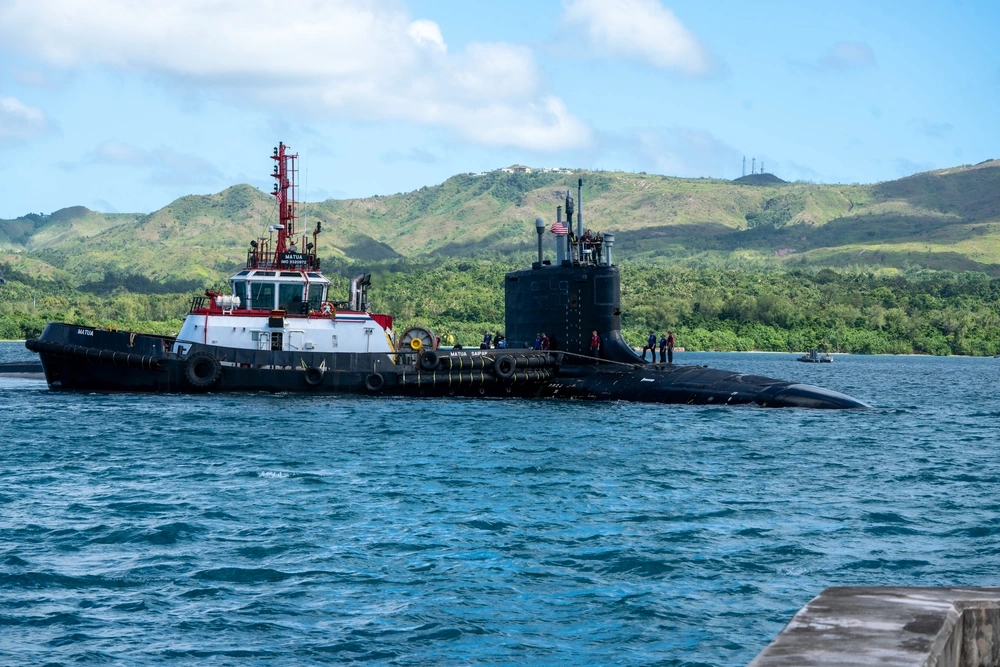

The Ship Special Mission (SSM) Kellie Chouest, which currently performs the SOUTHCOM mothership mission. Credit: U.S. Navy
SOUTHCOM’s new special mission vessel requirement is the first mothership spec written by a live maritime campaign, and it looks nothing like seven years of unmanned fleet theory.
The U.S. Navy posted a request for information (RFI) on SAM.gov on July 20 seeking a Special Mission Vessel to support U.S. Southern Command (SOUTHCOM) operations across the Eastern Pacific and Southern Caribbean.1 A Navy spokesperson described the ship as a versatile “mothership” for crewed and uncrewed air and surface platforms. The Request for Proposal will follow Fiscal Year 2027 appropriations, timed against the charter on Kellie Chouest, the offshore support vessel now performing the mission, which expires on March 31, 2028.
Seven years after the Navy launched its uncrewed surface vessel (USV) programs, the first drone mothership requirement written by a live maritime campaign calls for steel, diesel, bunks, and a crew. The theater actually fighting with drones asked for a workboat to run them.
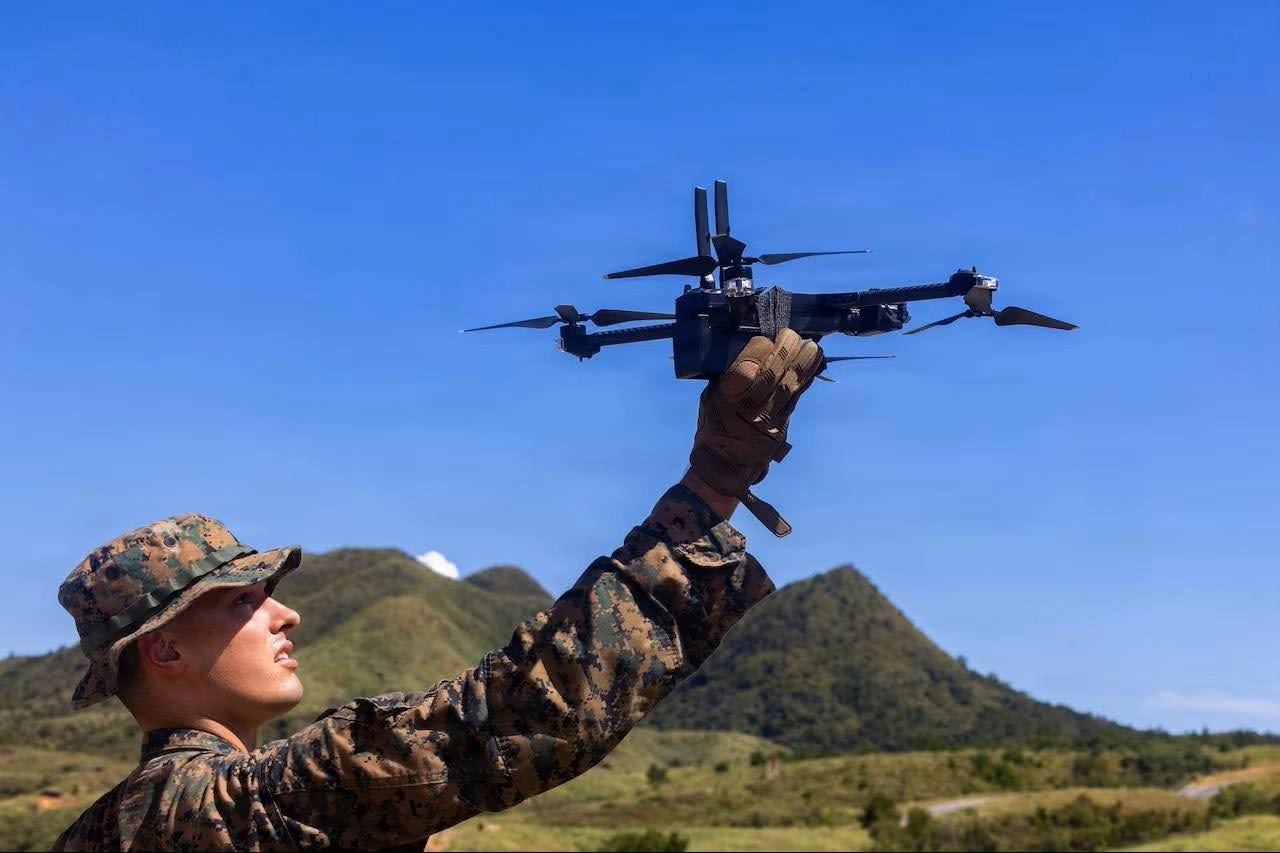
The specification is deliberately modest. The Navy wants a steel monohull or catamaran between 300 and 400 feet, making 10 knots sustained across 9,600 nautical miles, with 30 days of endurance and .50 caliber mounts as the only armament. Drone provisions anchor the document, with a dedicated 20-by-20-foot clear deck for vertical takeoff Class 2/3 uncrewed aerial systems (UAS) and sockets for two 20-foot containers housing their control and maintenance. The RFI even instructs industry to use “existing, non-developmental platforms to the maximum extent possible.”
The Navy already knows this works, because it has been paying for it by the month. Kellie Chouest, a 310-foot offshore support vessel, operates under a four-year, $70.3 million Military Sealift Command charter with Alpha Marine Services, an Edison Chouest Offshore affiliate.2 SOUTHCOM calls the ship a forward operating base for partner navies and declines to say which drones she launches today.3 A chartered commercial hull is running uncrewed systems in an active campaign for less than $18 million a year.
The purpose-built USV fleet cannot say the same. In July 2025 the Navy merged its Large and Medium Unmanned Surface Vessel programs into the Modular Attack Surface Craft (MASC).4 Congress restricted MASC construction by statute in December, and on March 26 the service cancelled the program in favor of a recurring MUSV “marketplace” backed by $2.1 billion.5 6 Seven years in, the scoreboard reads three acquisition strategies and zero program-of-record drone ships in the water.
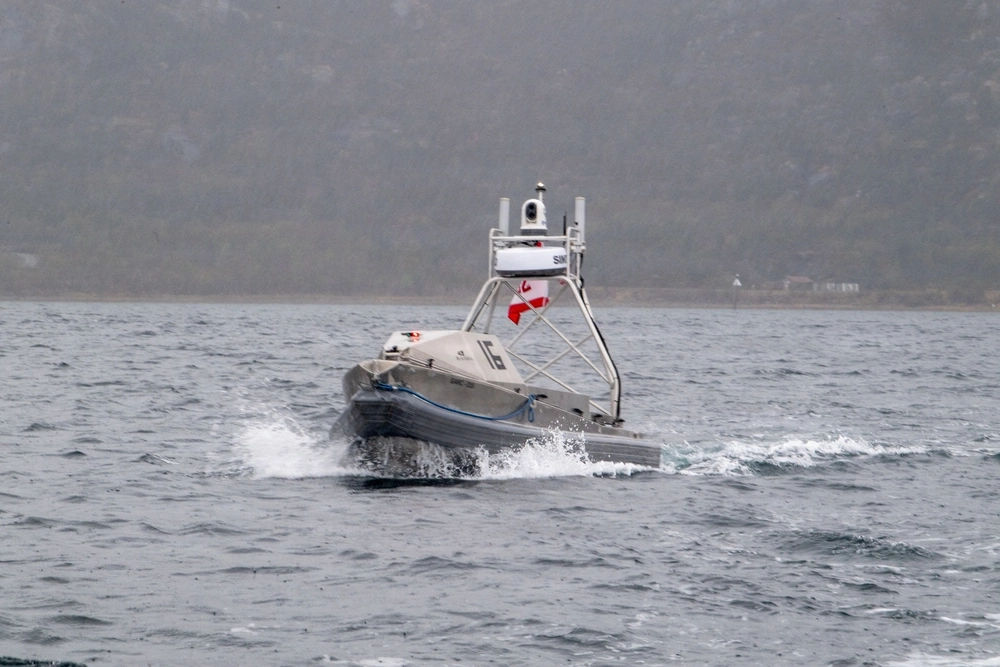
The drones themselves are fine. Saronic Corsair drone boats struck Iran’s Bandar Abbas naval base on July 12 in the first acknowledged American combat use of kamikaze USVs, and a Global Autonomous Reconnaissance Craft blew a hole in the ex-USS Peleliu five days later at RIMPAC 2026.7 8 What a 700-nautical-mile boat cannot do is cross the Eastern Pacific, refuel itself, or hold a detainee. Every one of those gaps appears in the RFI as a line item.
Our read is that the crewed commercial mothership paired with cheap attritable craft is the hybrid fleet architecture that actually works, and combatant commands will keep writing requirements that look like this one. What is clear is that the demand signal has inverted. In SOUTHCOM the architecture arrived first, chartered by the month, while the acquisition system was still renaming its programs. The most consequential ship in the Navy’s hybrid fleet may end up being the least futuristic thing in it.
References
1. U.S. Department of the Navy. “Request for Information (RFI): Special Mission Vessel (SMV) – Helicopter, Unmanned Aerial System (UAS), Unmanned Surface Vehicle (USV) & Small Craft Support Vessel.” SAM.gov, July 20, 2026. https://sam.gov/workspace/contract/opp/57889edc24cd40089188290808afd5e6/view
2. Blenkey, Nick. “Chouest Affiliate Awarded $70.2 Million MSC Contract.” Marine Log, March 24, 2023. https://www.marinelog.com/news/kellie-chouest-awarded-70-2-million-msc-contract/
3. U.S. Southern Command (@Southcom). X post. X. https://x.com/Southcom/status/2049126489216647301
4. Shelbourne, Mallory. “Navy Creates New ‘Marketplace’ for Medium Unmanned Surface Vessels After Cancelling MASC Program.” USNI News, March 26, 2026. https://news.usni.org/2026/03/26/navy-creates-new-marketplace-for-medium-unmanned-surface-vessels-after-cancelling-masc-program
5. O’Rourke, Ronald. “Navy Large Unmanned Surface Vessels (USVs): Background and Issues for Congress.” Congressional Research Service, Jan. 14, 2026. R45757. https://www.everycrsreport.com/files/2026-01-14_R45757_b4197e7c30d8280c0b7b8b3bc43ee9949aad60e0.html
6. Shelbourne, Mallory. “Navy Creates New ‘Marketplace’ for Medium Unmanned Surface Vessels After Cancelling MASC Program.” USNI News, March 26, 2026. https://news.usni.org/2026/03/26/navy-creates-new-marketplace-for-medium-unmanned-surface-vessels-after-cancelling-masc-program
7. U.S. Central Command (@CENTCOM). “Yesterday, using multiple one-way attack surface drones, CENTCOM forces successfully struck a submarine and ship maintenance facility in Iran.” X, July 13, 2026. https://x.com/CENTCOM/status/2076679617440530442
8. Sutton, H.I. “U.S. Navy Deploys Ukraine-Style Kamikaze Sea Drones During Pacific SINKEX.” Naval News, July 2026. https://www.navalnews.com/naval-news/2026/07/u-s-navy-deploys-ukraine-style-kamikaze-sea-drones-during-pacific-sinkex/