Ready Reserve Force modernization is crucial, but not sufficient, for increasing America’s maritime capacity. New ships won’t be any more ready without the mariners to sail them. A modernization strategy must balance shipbuilding innovation with merchant mariner education and retention.
State of the Ready Reserve Force
Congress created the National Defense Reserve Fleet (NDRF) in 1946, placing several thousand ships in reserve for use in war or national emergency.1 Two decades later, Vietnam-era sealift demands quickly demonstrated the NDRF’s poor readiness.
The Ready Reserve Force (RRF) is the response to this shortfall.2
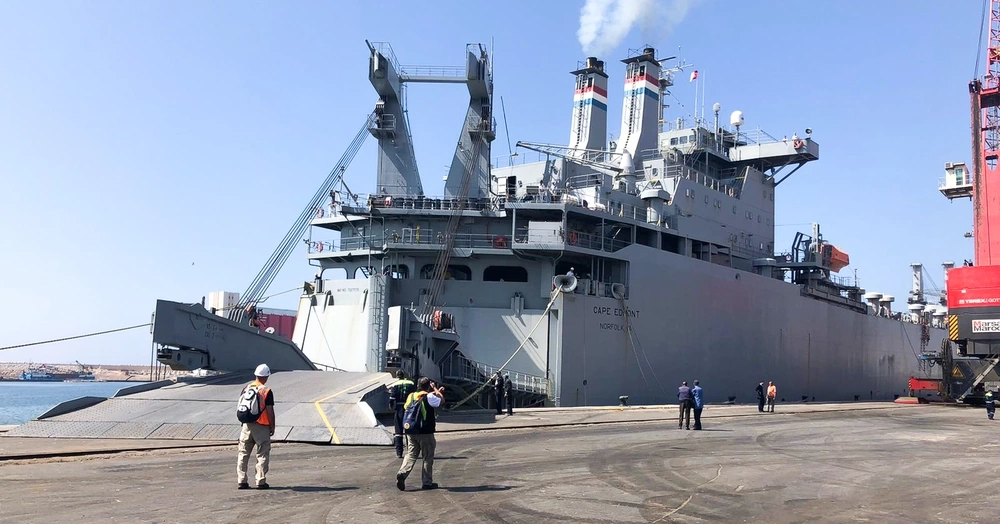
A subset of the NDRF, the RRF consists of roll-on/roll-off, crane ships, and aircraft maintenance ships. Kept at a heightened state of readiness relative to the NDRF, these ships are ready to sail within five days to provide sealift surge capacity during a major conflict.
In her 2023 Congressional testimony, then Maritime Administrator Ann Phillips described the state of American shipping.3 Fewer than two hundred US-flagged commercial vessels carry less than two percent of our country’s seaborne cargo. Only eighty-five of those ships engage in foreign trade — and most of those are in the Maritime Security Program.
The state of the RRF reflects American shipping in general. On average, the ships in the RRF are more than 45 years old.
Congress and the Trump Administration are taking steps to modernize the RRF. Last year, the Department of Transportation issued twenty contracts worth $6.2 billion to maintain the current fleet,4 and the White House introduced a Maritime Action Plan calling for the recapitalization of the RRF through a mix of new builds and purchases from commercial fleets.5
State of the Merchant Mariner Workforce
But new ships aren’t enough. With so few US-flagged commercial ships, Americans have fewer opportunities to pursue maritime careers. A 2017 MARAD workforce strategy estimated that America needs nearly 14,000 qualified mariners to sustain concurrent and military sealift operations – but has fewer than 12,000 active, qualified mariners.6
Legislative and executive steps are addressing the mariner workforce. For example, MARAD is improving maritime education by building five National Security Multi-Mission Vessels (NSMV) to support the State Maritime Academies’ training mission.
How Can the RRF Take a Round Turn?
Increasing the number of US-flagged vessels in commercial trade, revitalizing US shipbuilding, and restoring the maritime workforce are all necessary elements to fulfilling the Ready Reserve Force mission.
Rapidly and cost-effectively modernizing the RRF with new builds will require process discipline, automation, and novel construction techniques.
MARAD’s experience with the NSMV program can be a template for RRF modernization.7 This new class was purpose-built with a roll-on/roll-off ramp, crane, and helicopter landing area, so cadets can experience all aspects of maritime operations at sea. The shipbuilding program also took a new approach by contracting with a commercial shipbuilder that used commercial design and construction standards.
Increasing the number of mariners graduating from our maritime academies will require addressing concerns at both ends of the education pipeline. Incoming students and graduating cadets need to know that maritime careers will be there for them. They also need financial support to cover tuition and training at sea.
Still, the current maritime academies can only graduate a limited number of new mariners. Establishing a sixth State Maritime Academy in a coastal state like Virginia will increase the number of seats just as the Maritime Action Plan’s effects kick in.
Keeping mariners licensed is essential for retention. Streamlining US Coast Guard (USCG) licensing processes will help mariners keep their licenses current. At the same time, updating USCG IT infrastructure will let stakeholders track the status and readiness of the maritime workforce.
Strategic Sealift Officers (SSOs) can bridge a potential RRF workforce gap. Acquiring and building new ships may require more than the ten mariners currently assigned to each RRF vessel. The Navy Reserve could support activation, refurbishment, and training during RRF modernization by increasing the SSO annual service obligation beyond two weeks.
RRF Modernization Won’t Happen Without Mariners
Without the Ready Reserve Force, America’s warfighters don’t get the resupply they need in a major conflict. But modernizing our nation’s sealift fleet requires more than reinvigorating our shipyards. The ships won’t move without the men and women in the US Merchant Marine and the broader maritime workforce.
Workforce innovation is just as important as shipbuilding innovation and must be part of a coordinated strategy.
References
1. U.S. Department of Transportation, Maritime Administration. (2025, March 28). National Defense Reserve Fleet (NDRF). https://www.maritime.dot.gov/national-defense-reserve-fleet
2. U.S. Department of Transportation, Maritime Administration. (n.d.). The Ready Reserve Force (RRF). https://www.maritime.dot.gov/national-defense-reserve-fleet/ndrf/maritime-administration%E2%80%99s-ready-reserve-force
3. U.S. Department of Transportation. (2023, May 11). Assessing the shortage of United States mariners and recruitment and retention in the United States Coast Guard. https://www.transportation.gov/assessing-shortage-united-states-mariners-and-recruitment-and-retention-united-states-coast-guard
4. U.S. Department of Transportation. (2025, July 30). President Trump’s Transportation Secretary Sean P. Duffy commits $6.2 billion to manage America’s Ready Reserve Force. https://www.transportation.gov/briefing-room/president-trumps-transportation-secretary-sean-p-duffy-commits-62-billion-manage
5. The White House. (2026, February). America’s Maritime Action Plan: Restoring America’s Maritime Dominance. https://www.whitehouse.gov/wp-content/uploads/2026/02/Restoring-Americas-Maritime-Dominance.pdf
6. U.S. Department of Transportation, Maritime Administration. (2025, March). MARAD Mariner Workforce Strategic Plan: Fiscal years 2023–2027 (Rev. March 2025). https://www.maritime.dot.gov/maritime-workforce/mariner-workforce-strategic-plan
7. U.S. Department of Transportation, Maritime Administration. (2023, October 16). National Security Multi-Mission Vessel (NSMV) fact sheet. https://www.maritime.dot.gov/national-defense-reserve-fleet/rrf/national-security-multi-mission-vessel-nsmv-fact-sheet